

The Socialist Six Nations
Romania, East Germany, Poland and Czechoslovakia in the Victory Cup.

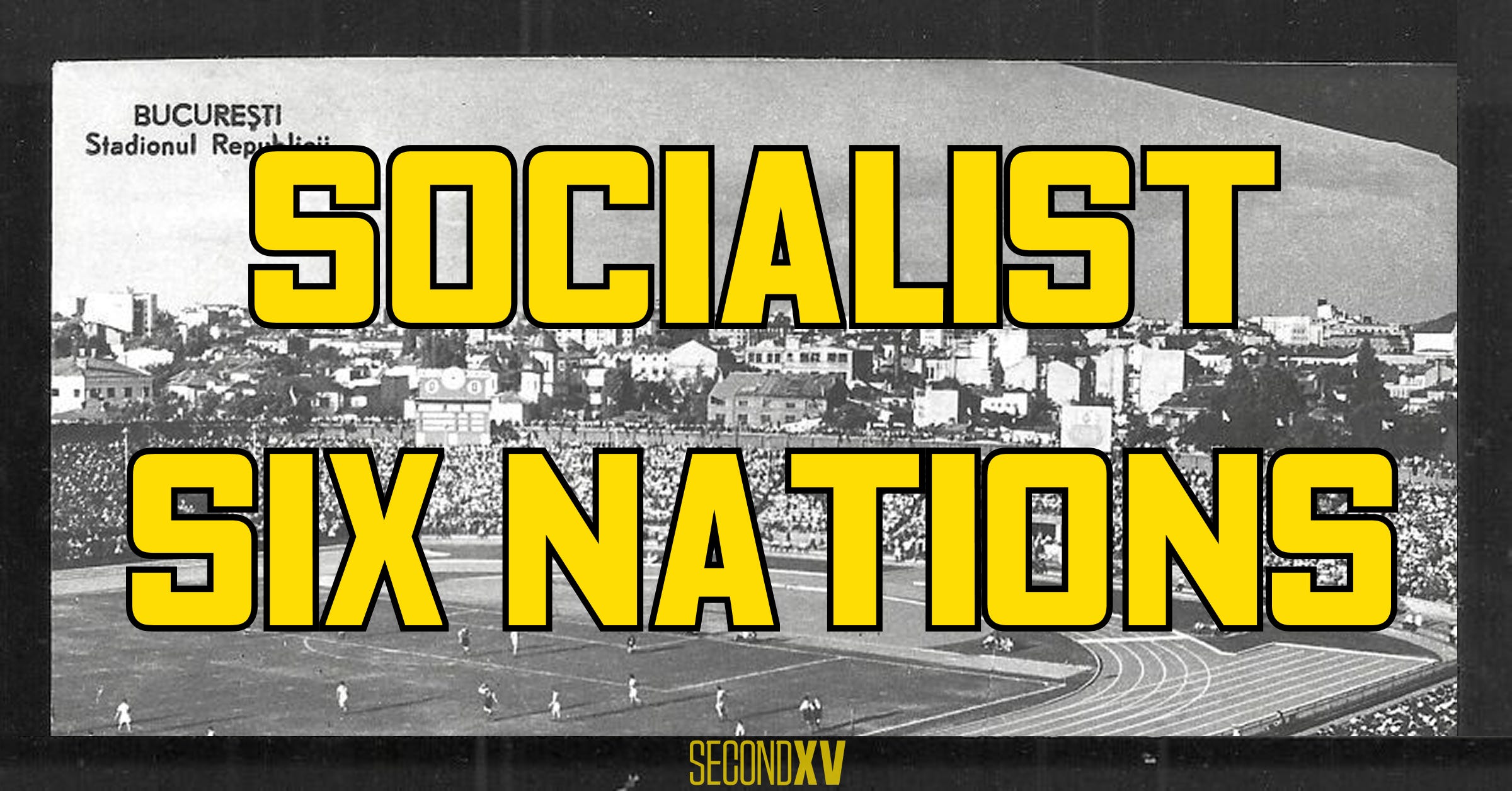
The 1959 Five Nations Championship shifted the balance in European rugby.
France won the title outright for the first time in their history. Ireland and Wales finished second, and England failed to win a game at home.
The hegemony of the British Isles was finally challenged, and it signalled a change in the future of the sport, that its future might not rest with the RFU.
But, one month after France’s famous victory, another intra-European rugby tournament was about to start further east along the continent.
This cup had only four nations, two of which no longer exist in 2026. The Republica Populară Română, the Československá socialistická republika, the Polska Rzeczpospolita Ludowa and the Deutsche Demokratische Republik. Better known as Romania, Czechoslovakia, Poland, and East Germany.
At the end of the ‘50s these countries had a lot in common, and most of it was bad.
They had all experienced heavy losses in World War II. Both Czechoslovakia and Poland lost an estimated 6,000,000 soldiers and civilians whilst millions of Jews from both countries were killed by the Nazis.
East Germany didn’t exist as a state during the war, it was created wholecloth from the Red Army soldiers’ uniforms that occupied it following four years of mass reparations, dismantling of industry, and Soviet supervision.
Whilst Romania, initially fighting on the Axis side but switching allegiance after a royalist coup in late 1944, suffered around 500,000 civilian deaths, many of which were Jews and Romas killed in the Holocaust and wartime persecution.
At the Yalta conference, the Western Allies accepted Soviet dominance in Eastern Europe, and although they avoided full occupation, they all fell under Stalin’s thumb, the tip of which now extended as far as his army’s wartime advance into Central Europe.
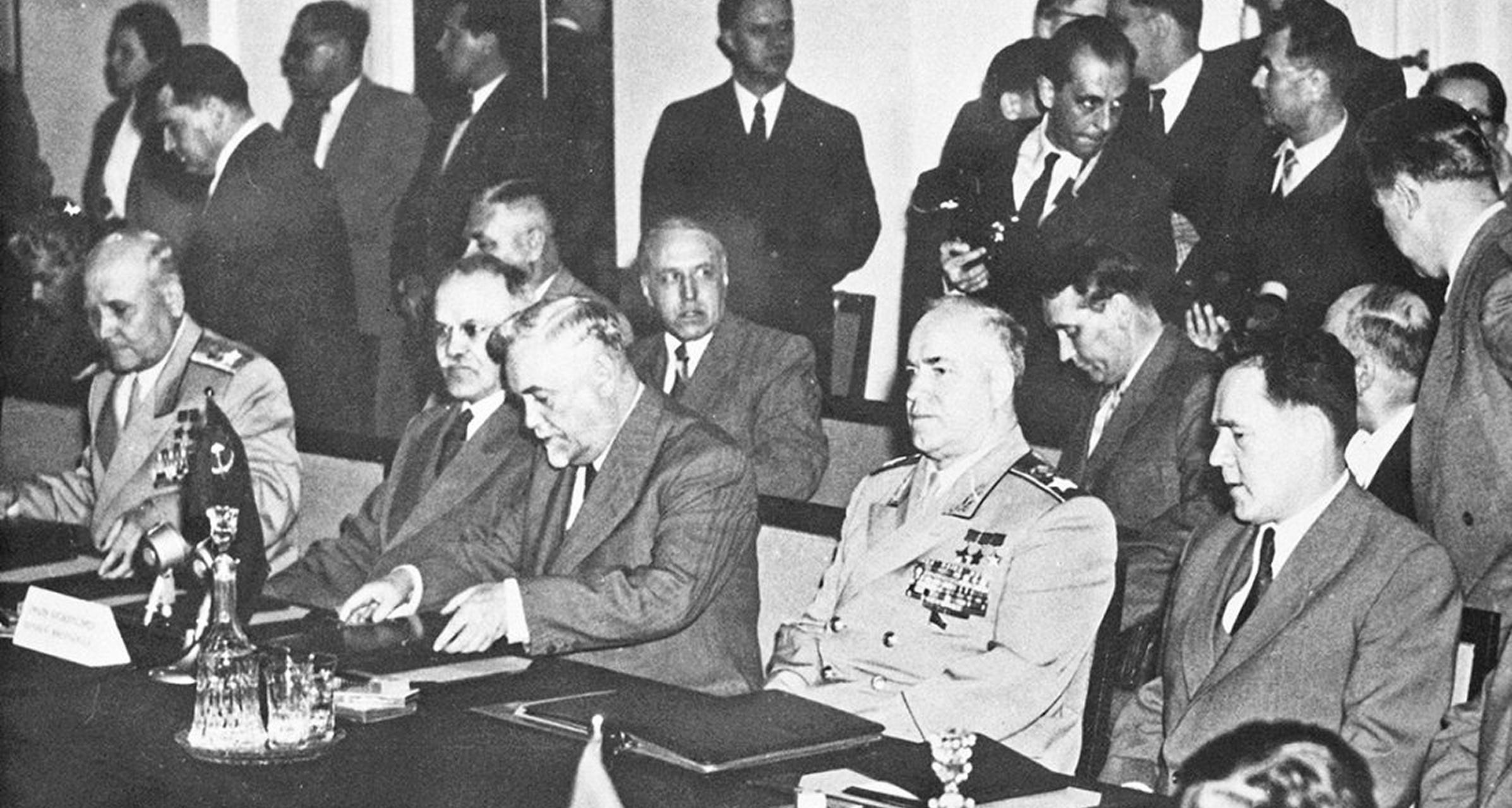
So Soviet influence was thoroughly embedded throughout the nations. East Germany was ostensibly a Russian satellite state with troops on the ground. Czechoslovakia’s communist revolution of February 1948 extinguished its last democratic institutions. While Poland’s communist rule was imposed through rigged elections and maintained despite popular resistance.
And crucially, in 1955, all four joined the Warsaw Pact, binding them into a NATO-counterweight military alliance and locking their futures together behind the Iron Curtain.
The Iron Curtain, an unofficial barrier on engagement with Eastern Europe from the West, was fully in effect post-war. Though there was no explicit policy drafted up, there were clear limits. Travel was restricted and although the Berlin wall wasn’t yet built, the permits, surveillance, and administrative barriers deliberately slowed movement between the two German states. Sport rarely extended beyond the Eastern bloc outside of established international events.
But sport was intrinsically linked to the nations’ statehood. All four replaced independent sports clubs with massive, state-funded umbrella organisations (the DTSB in the GDR, the UCFS in Romania, and the GKKF in Poland, and the ČSTV in Czechoslovakia)1. Though team sports benefitted from funding, individual sports at high profile events like the Olympics, were deemed a cheaper route to success2.
Using this system, high-level sport was funnelled through military and governmental associations, which provided full-time athletes with state funding under the guise of “amateur” service. In Romania, clubs like Dinamo Bucharest were created directly as organs of the state, alongside army-backed institutions such as Steaua Bucharest, which embedded elite sport within the military machine.
For rugby, which lacked the centralised platform of a World Cup or UEFA like football, specific tours were rare and access to the Five Nations was unlikely. If they wanted to play, they had to create their own sandbox.
In the socialist view, sport not only improved the individual and the nation, but also worked to build brotherly bonds between their brothers. There were many tournaments organised within the bloc, like the Peace Race, the Tour de France of the East, and Spartakiad, the USSR’s equivalent to the Olympics, which included vast football competitions between republics and workers’ teams. Rugby was next in the line-up.
And one country in particular was keen to lead the way.
Romania had shown an interest in the sport of rugby before the war. It had a long-standing relationship with France, and the many Romanian students returning from their studies in Paris created clubs in the early twentieth century. The sport held a privileged place among the bourgeois class, and developed quickly, winning a bronze medal in the 1924 Olympic games3. When FIRA was founded by France in 1931 as a rival body to the RFU, the Romanian Rugby Federation was one of the founding members.
Because of this interest, after the war, rugby was used as a diplomatic tool in the nation by the West. As Professor Tony Collins told Mick O’Hare in a fascinating article on the subject, “The British government was aware the Romanians were somewhat semi-detached from the Soviets…And while still a Soviet ally, the Romanians were considered slightly more open to external influences, so there were attempts to use sport and other cultural activities to undertake what is now known in foreign-policy circles as ‘soft diplomacy’.”
As such Bucharest welcomed visiting tours from Swansea, Cardiff and Harlequins in the mid-50s, and even took a trip to England to play against club sides.
But this had stalled by 1959. After Romanians were accused of professionalism, they were blackballed by the RFU. As such, they were instead forced to find opposition among the more nascent rugby nations of the Eastern Bloc.
Which is how they ended up with a guest list of Poland, Czechoslovakia and East Germany. A clump of countries that had served as a no-man’s-land were now attempting to stand on their own feet, albeit in the much larger shoes of the USSR.
So a tournament was arranged. Dubbed the Victory Cup, it was set to be held in Bucharest over a week in May 1959. The date and name were deliberate reminders of the previous war, designed to coincide with VE day on 18 May.
These countries had varying degrees of interest in rugby. The Czechs had also been founding members of FIRA, but the sport hadn’t survived the transition through World War II. East Germany was naturally playing its second ever international at the tournament itself, having only existed as a nation for two years. Poland had only been founded the year before, in part as a way to compete internationally with its neighbouring nations.
Teams were formed nonetheless, and for many it was a rare chance to play abroad. For some, the two-week journey may have been their first taste of travel outside their own country in years. And the Bucharest they arrived in was a city in flux.
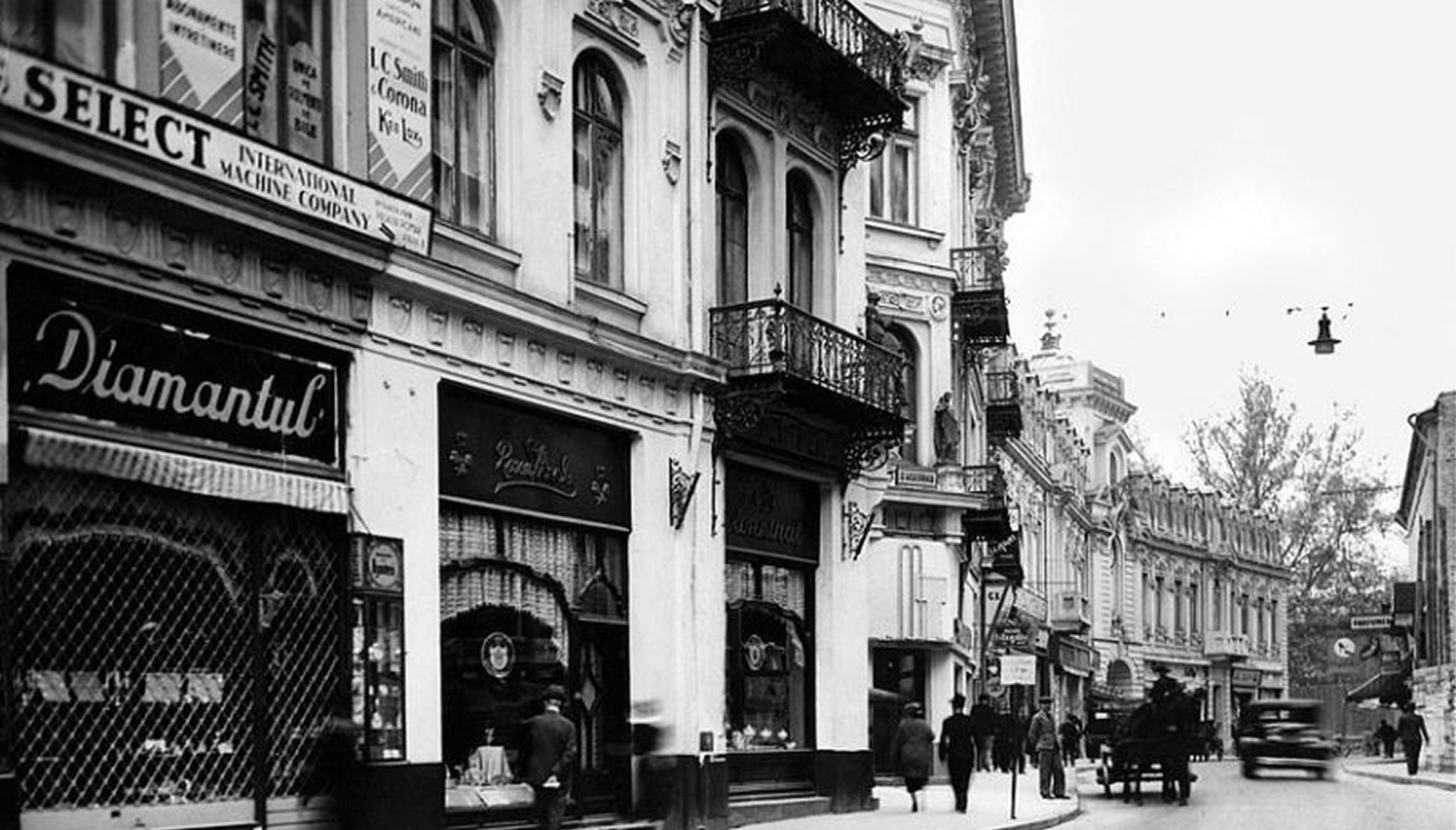
Pre-war Bucharest was nicknamed “Little Paris” because of its long avenues, pale stone façades, and elegant architecture, all inspired by French urban design. The old town was stuffed with lime trees, avenues of stone and red brick, and small public gardens with benches and rose bushes which, according to contemporary memories, “smelled like a huge tea-pot every spring”.
Some of this was lost to wartime bombing, but far more was erased by the decade-long erosion of socialist planning. Future culture minister Pompiliu Macovei told the Politburo in 1953 that Bucharest was “a spider web of skewed and narrow streets, [where] 3/4 of its total surface is currently occupied by hovels.”
They were set on tearing it down, and building the socialist city of the future in its place. By 1959 it was well underway.
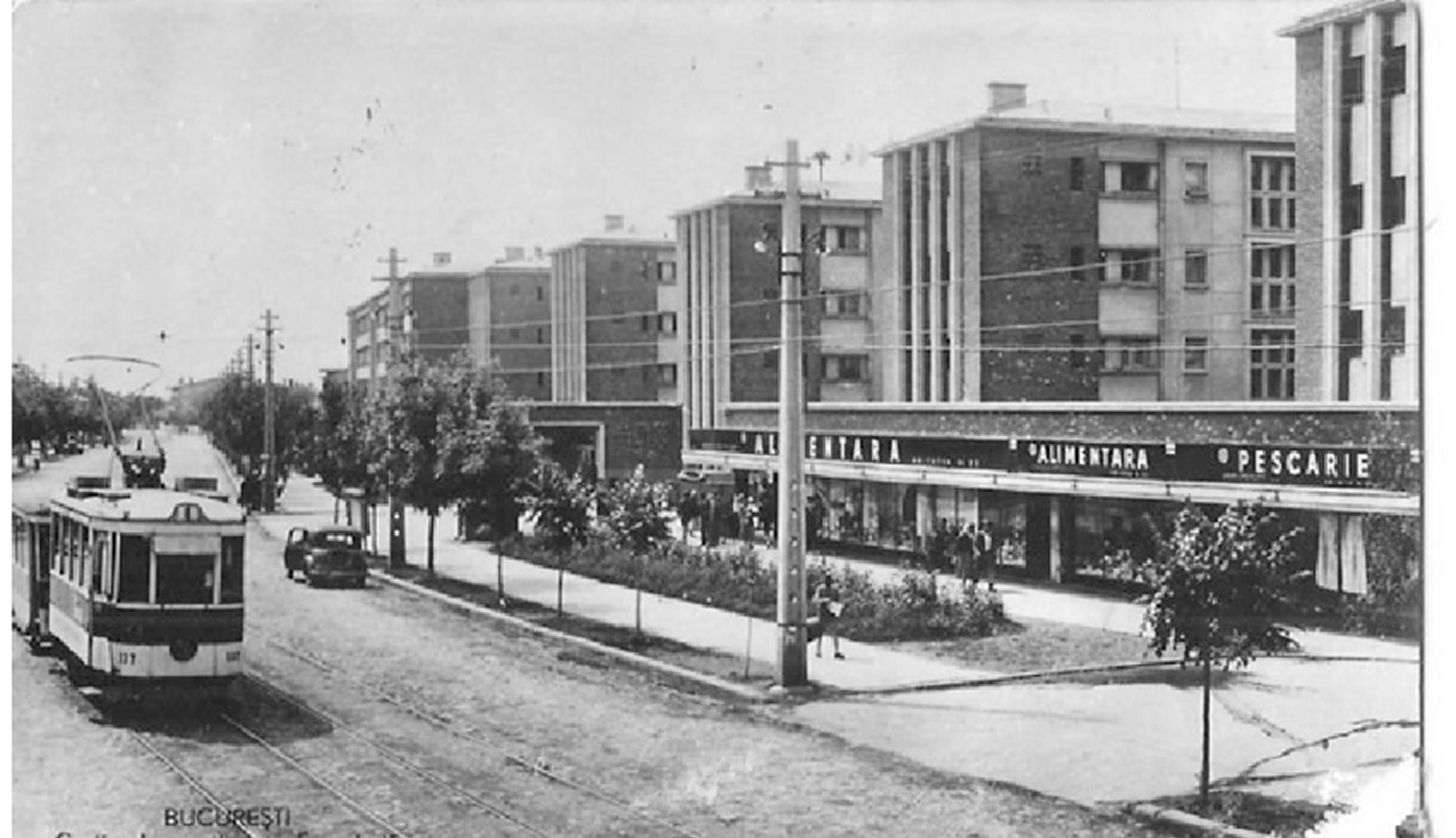
As the visiting rugby teams arrived and made their way into the city there would have been little sense of Paris.
They would have passed early socialist construction on the outskirts, kvartal-style concrete superblocks, eight, ten, even twelve storeys high.
As they got closer to town, the wide boulevards slowly unfolded and the remaining facades appeared, albeit partially pockmarked by war and wrapped in wooden scaffolds.
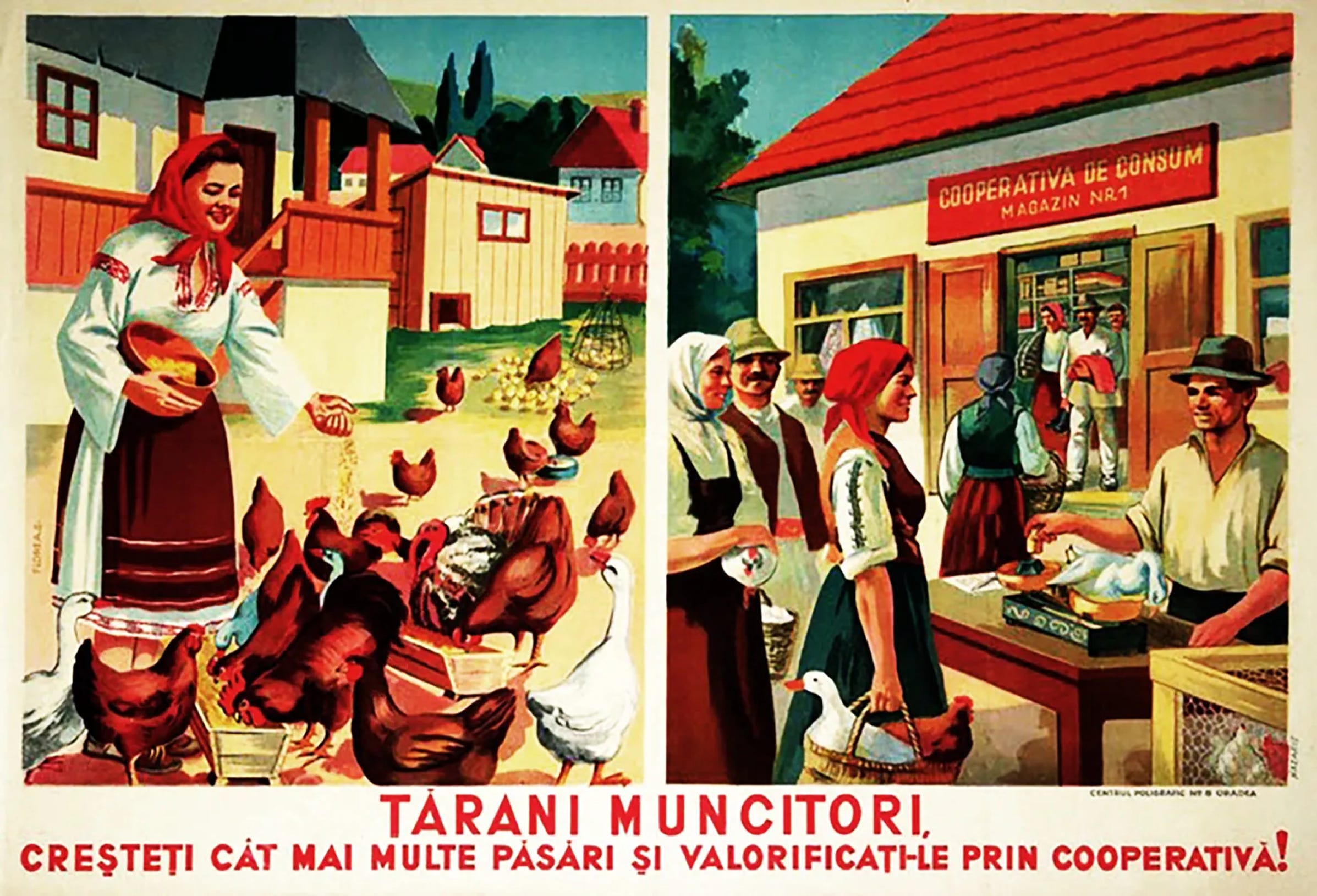
On the original stone, propaganda posters were pasted directly onto the masonry. Cherub-faced peasants with baskets and factory workers frozen mid-stride, slogans set in heavy block text. “Unity, work, discipline.” “Forward through labour.” “Socialism builds the new man.”
And for the visiting Czechs, East Germans, and Poles, even without the language, the meaning would have been instantly clear. The imagery, the colours, the tone, all of it was familiar.
This would have felt very much like home.
The players likely believed in their sporting mission. The cup was seen as a diplomatic mission. To quote Romanian sport newspaper Sportul Popular : “A good opportunity for strengthening the fraternal ties between the athletes of the participating countries [and] to make a useful exchange of experience in rugby.”
Which brought them onto the very serious issue of the games themselves.
The Victory Cup was a round robin style tournament where each would play the other in three matches held every two days. With all sides in attendance, it was inaugurated on Tuesday, 19 May 1959, at the Dinamo Stadium.
The opening ceremony featured anthems and military parades and laps around the track with flag waving from the delegates. More pomp than the Western tournaments, though fewer travelling fans. Even though travel among the friendlier nations was allowed, it was primarily Romanians which made up the 50,000 fans in attendance.
In the opening match, Poland produced a major surprise by defeating Czechoslovakia 9-6, a team that had been considered the second-strongest in the region. Romania followed this with a convincing 21-6 victory over East Germany (GDR), led by legendary fullback Alexandru Penciu, who scored two tries and kicked two conversions4.
In the second round Romania further asserted its dominance by crushing Poland 41-3, marking the highest score of the competition. Meanwhile, Czechoslovakia salvaged its standing by toppling the GDR 22-0. The next day a third-place was held between the GDR and Poland. They managed a 3-3 draw5.
The decisive match of the tournament took place on 24 May 1959, where Romania faced Czechoslovakia.
It was played at the “23 August” Stadium, then only six years old and the most prominent example of the regime’s urban transformation.
The stadium was an apt place for a final to showcase socialist sport. It was designed to be a comprehensive training hub for the “New Man”, with dedicated rugby and football facilities, two swimming pools, an open air theatre with 4,000 seats, fully stocked gym and even a parachuting tower. The Romanian government saw sport as an instrument of the state, and had constructed a grand stage for it to perform on6.
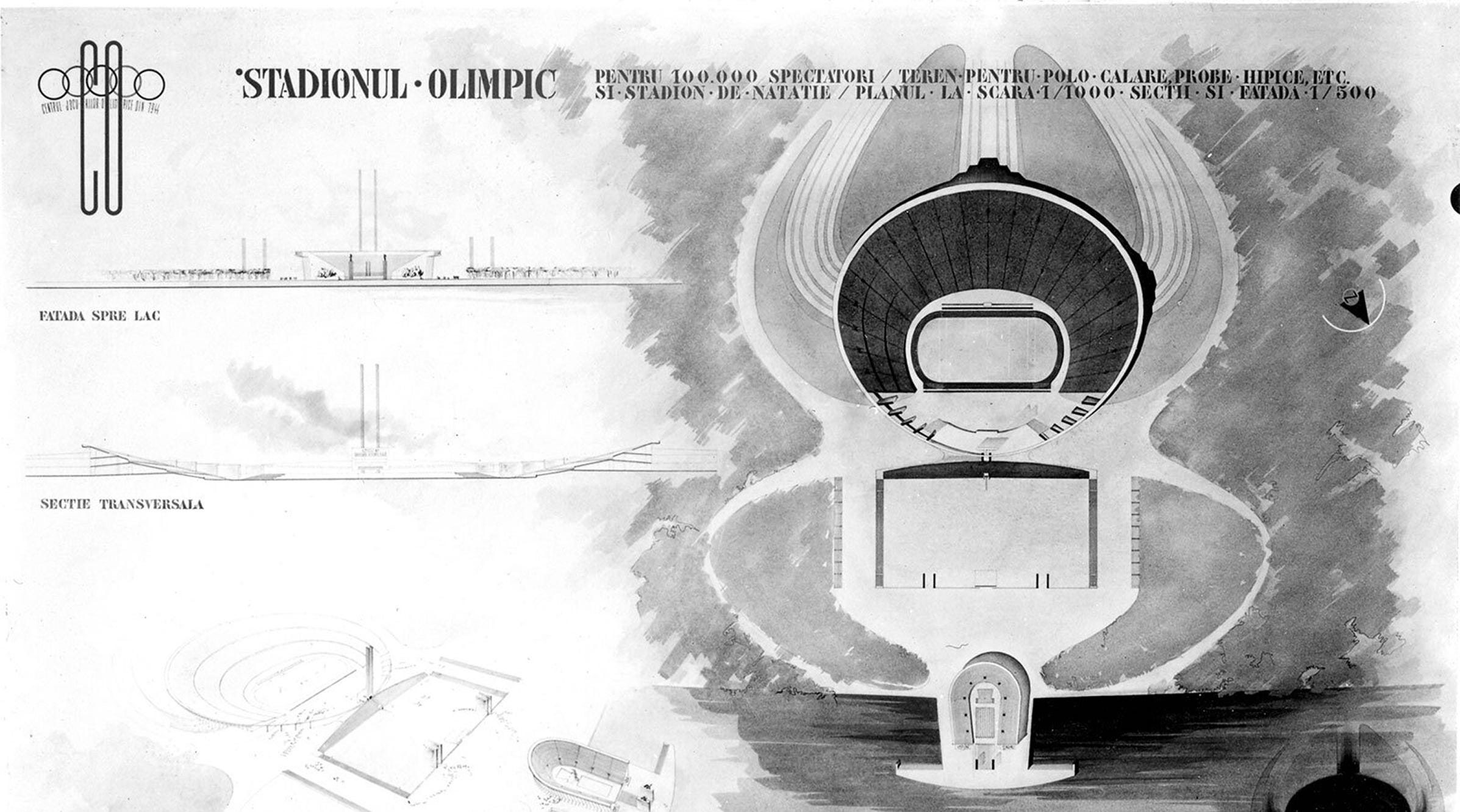
Arched openings at ground level gently gestured fans through groups of tiered trees that camouflaged the concrete edges. Stairs led up to the lip of the stands that looked over the wide flat pitch, dipped neatly in the ground, like the imprint left behind when a stone is lifted from the sand.
Looking up from the pitch, it would give the impression that the crowd were arriving from the crest of the hill like an invading army. That there could be thousands more waiting beyond the 50,000 standing already, wearing flatcaps, rolled up shirts, and eating sunflower seeds by the fistful.
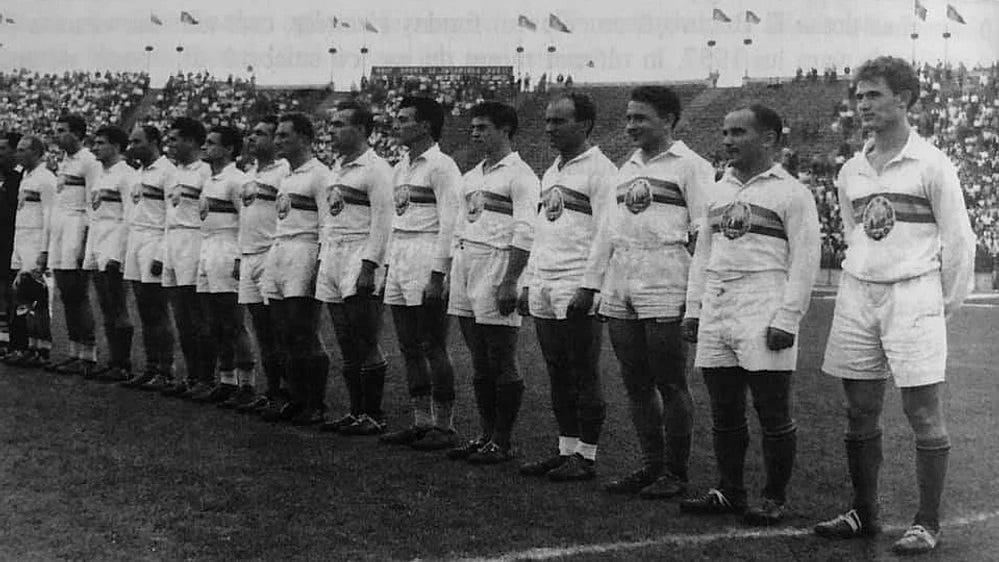
There was structured applause from the crowd, serious in its support: delegates from youth organisations and unions, and the straight faces of the central committee in the executive box. “Te slăvim, Românie” rang in their ears. The pressure was on the Stejari to win that day. Luckily, they were ready.
Playing aggressively through the forwards, they struck first. After a back row was tackled off the ball, a penalty try was given by the Italian referee, perhaps under the pressure of the crowd. After a close end to the half, Romania scored first after the second-half whistle. A poor kick from the Czech full back was met with an even worse chase, and flanker Alexandru Ionescu raced it back and touched it down. Romania kept the pressure on, but couldn’t turn it into more points, and the game ended 11–0 to the hosts.
A victory ensured that Romania finished at the top of the final standings with a perfect record of three wins from three games. A resounding victory for the rugby side, the communist party, and Romanian People’s Republic.
In hindsight, it’s no surprise that they ran through the competition. This team was the greatest the country has ever seen.
Romania went undefeated for the next 25 games into the 1960s as dictator Nicolae Ceausescu took power and the country continued to develop a further independence from the Eastern bloc. In 1960, they peeked under the Iron Curtain and beat France for the first time 10-0 in Bucharest. A France that was running riot in the rest of the world and were the reigning champions of the Five Nations. In 1965 the clubs Grivita Rosie and Steaua Bucarest won back to back European titles, beating Grenoble and Mont-de-Marsan, whilst the national side beat both France and Italy in 1962.
The Victory Cup continued for the next few years even as The Oak’s roots spread further West. Subsequent editions were held in each of the member countries, and it was eventually renamed the Peace Cup in 1961. Romania won every game and every cup until it evolved into the FIRA European Championship with Italy and France joining in 1965.
Although it was set up to help grow the game regionally, the tournament was always a one-sided affair. A way for the healthier Romania team to beat up on the sick men of European rugby.
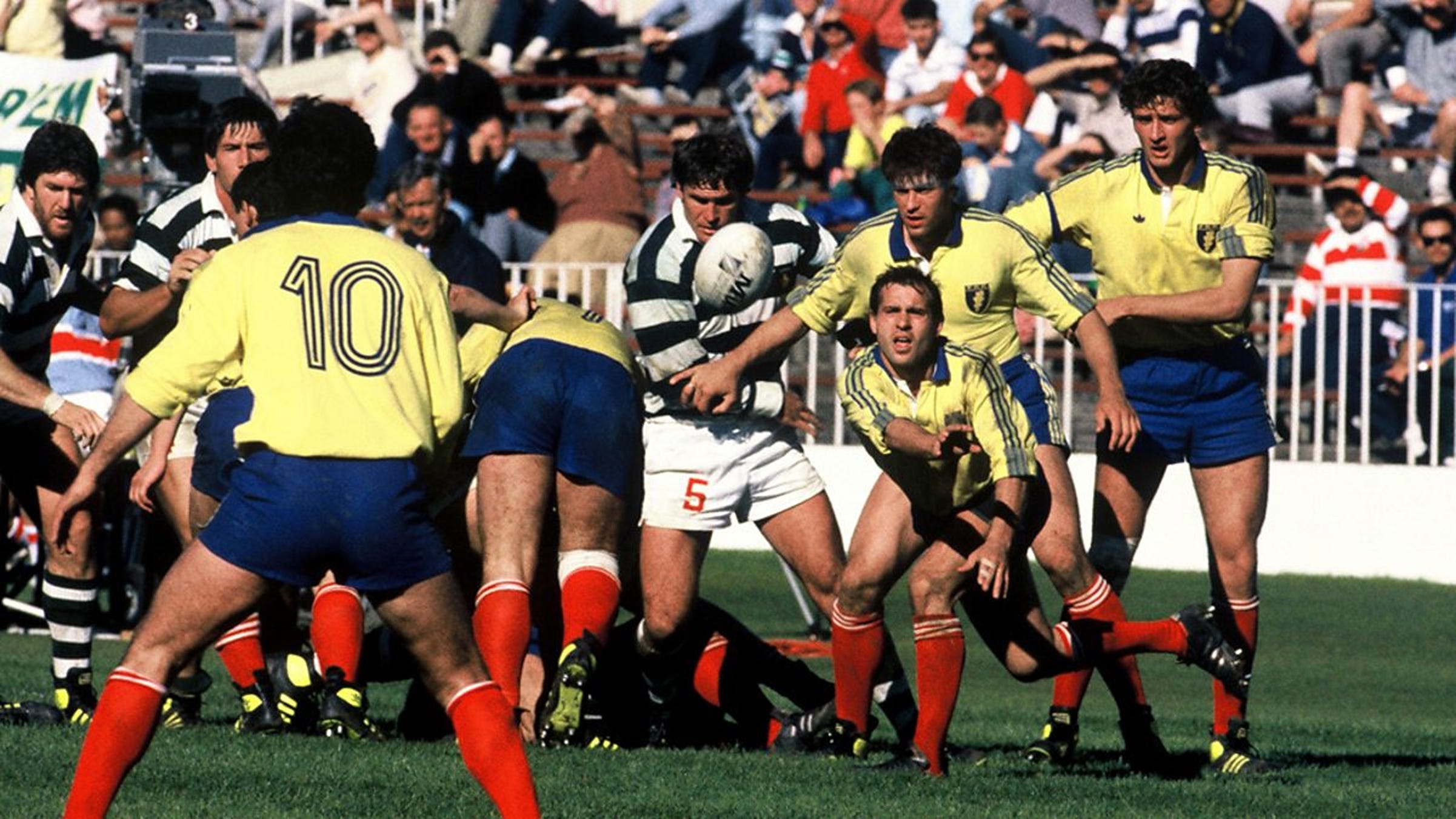
But their undefeated streak did scratch a permanent tally on the soul of Romanian rugby. The team is still considered the Golden Generation. And after all, they could only beat whoever was put in front of them, including a French side that were the reigning Five Nations Champions.
Romania has long held ambitions for a seat at European rugby’s top table. Historically, they were held back by the restrictions they faced.
And in another timeline, it is not hard to imagine them not as perennial champions of the Victory Cup, but as the sixth nation added to the Five Nations, with Italy left out in the cold instead. 7
East Germany’s DTSB stood for the Deutscher Turn- und Sportbund; Romania’s UCFS was the Uniunea Culturii Fizice și Sportului; Poland’s GKKF referred to the Główny Komitet Kultury Fizycznej; and in Czechoslovakia’s ČSTV, was the Czechoslovak Union of Physical Education.
At the 1960 Rome Olympics, Poland, Czechoslovakia and Romania all finished in the top ten of the medal table. East German athletes, still competing under a unified German banner, were responsible for two-thirds of their team’s medals.
Bronze was guaranteed. There were only three competing teams in 1924. USA, France, and Romania.
Alexandru Penciu, “Alexander the Great,” played fullback for Romania until 1967. An attacking threat and goal-kicker, he was the central player in their 'Golden' era. He later was allowed to play and coach abroad in Italy.
It seems that although Poland had the second best record, the final game between Czechoslovakia and Romania was considered the ‘final’, partly because of the disparity between Romania and Poland the previous day.
The stadium's architect Ascanio Damian, was a keen rugby player, and would have almost certainly been in attendance at the game that day.
Other sources: Hunedoara and Bucharest, cities where cinema/theatre programs were implemented as cultural vectors within the New Man's changing society Dan Idiceanu-Mathe and Roxana Carjan, The Impact of Communism on Sport James Riordan,. Romania and the Warsaw Pact: 1955-1989 Dennis Deletant and Mihail Ionescu. Impenetrable Plans and Porous Expertise: Building a Socialist Bucharest, Reconstructing Its Past (1953-1968) Emanuela Grama,. Propaganda and Performance: Bucharest’s 23 August Stadium (1953-1989) Puni Alexandru-Rareș and Gheorghică Florina-Georgiana,. The Post-War Relations Between Romania And The World Monica Boldea, Mihai Parean, and Maria Otil,. The French - Romanian Relations (1866-1914) Ana-Maria Vele,. Sport under Communism: The U.S.S.R., Czechoslovakia, The G.D.R., China, Cuba edited by James Riordan,. Sportul Popular (May 1959). Romanian-French Relations in the context of the Origins of the War 1898-1914 Nicu Pohoata.
Great perspective, many thanks. I remember playing with a number of Romanians in London in the early 80s and believing then that they would be a coming force in world rufby